Turn my eyes from looking at what is worthless; give me life in your ways
(Psalm 119:37)
What are my priorities?
My personal relationship with Jesus.
My personal relationship with my wife.
Our health, our home, our finances.
Our personal relationships with our kids & grandkids.
Our personal relationships with our extended family and friends.
Everything else
What’s the shift?
The shift is more like a narrowing of focus. Away from the goings on of the world (news, politics — although I still vote my conscience); Away from church life (although we still are contributing members of our local church body; Toward our specific assignment, and the purpose that this blog was created for.
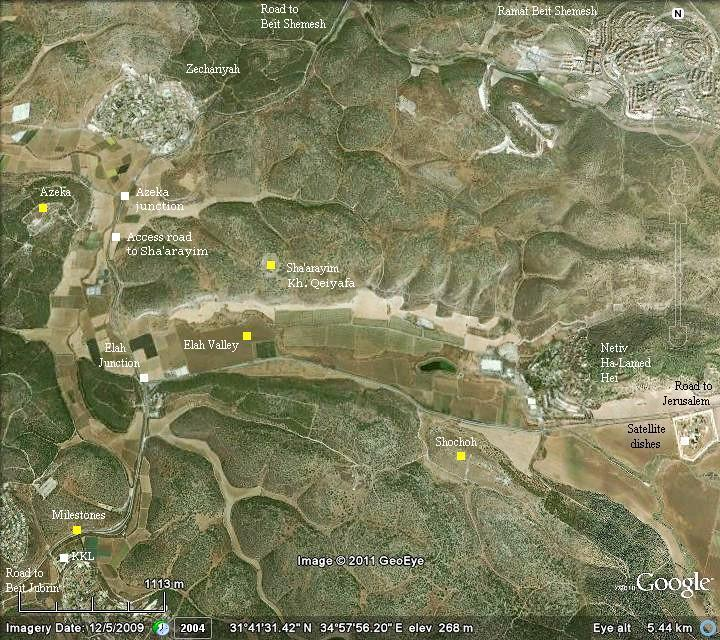
The Philistines started the trouble by “gathering their armies together” on Israel’s land – on a small mountain (lower than Liberty Mountain – here in Lynchburg, VA – about 1000 feet). So, they started it.
Then – in response – Israel’s king, Saul and his army gathered on a similar-sized mountain. A wide valley laid between the two armies.
400 years or so years ago (in the time of Joshua), the Israelites had been in a similar situation, and that time God gave them a winning strategy, but this time, they didn’t check with God.
So they set up camps at the two ends of this valley. You’ve seen pictures of these kinds of military camps with rows of little tents (I think I remember looking down on one in one of the Lord of the Rings movies), with campfires here and there. This probably went on for some time – days, maybe even weeks; it was a stalemate.
—————————————————————
1 Samuel 17:4
One day, a gigantic man, wearing the best armor, and carrying the best weapons, struts out into the valley. And he begins to call out to Saul’s army in a loud voice, basically challenging King Saul to a duel. But Paul does not come.
He is afraid (my Bible says “dismayed and greatly afraid“).
From Goliath’s perspective the Israelites were no different than the Philistines. Both had gods… and both were idols.
And Goliath knew he was a giant. But he didn’t know about the Israelites’ “superpower,” and unfortunately, it seems that the Israelites had, over the years, forgotten about it too.
—————————————————————
Every born-again Christian has this same superpower… You see, “God has specifically chosen the weak things of this world so that He can use us to shame those who think are strong.”
—————————————————————
1 Samuel 17:17-18
The story takes a different turn. I almost said unexpected but it really wasn’t, because in verse 15 it mentions that a young guy named David, “Occasionally went and returned from Saul to feed his father’s sheep at Bethlehem.”
That’s talking about how, in the previous chapter, David got a part-time job singing for King Saul.
He got that job because of someone’s recommendation. It sounds like that person knew a lot about David.
“Look, I have seen a son of Jesse the Bethlehemite, who is skillful in playing, a mighty man of valor, a man of war, prudent in speech, and a handsome person; and the LORD is with him.”
Can you imagine getting a job recommendation like that?
His father trusted him to take food to his older brothers who were soldiers in Saul’s army, and to find out how they were.
He was the youngest brother and he normally took care of his father’s sheep.
————————————————————–
1 Samuel 17:20 and 22
Despite his age, the Bible tells us that he:
Rose early in the morning.
Left the sheep with a keeper.
Took the things and went as Jesse had commanded him.
And left the supplies in the hand of the supply keeperbefore he ran to greet his brothers.
God did not just pick David’s name out of a hat.
He knew that even at that age, “David was a man after God’s own heart.” Even though David made many mistakes in his life, he cared very much about doing things God’s way. And it broke his heart when he didn’t.
And God rewarded him for that.
————————————————————–
1 Samuel 17:26
Davis overhears a conversation among the soldiers and says, “Who is this uncircumcised Philistine, that he should defy the armies of the living God?” He sincerely believes that it is WRONG for the soldiers to listen to Goliath anymore!For Him to be allowed to keep mocking God!
And I think you know the rest of the story.
The point though is that David’s story didn’t happen because he was any different than us. He wasn’t.
He knew God. He knew the Bible. And he made it his business to obey it. And so can we.
Questions:
1 Samuel 17:2 – When the Philistines “gathered their armies for battle,” why did Saul’s army “encamp” on the next hill? Why didn’t they just charge? What else could they have done?
1 Samuel 17:8-11 – When Saul and his army heard Goliath’s challenge, why did they become “dismayed” and “greatly afraid?” What was their mistake?
1 Samuel 17:12 – How old was David? Give evidence to support your answer.
1 Samuel 17:25-30 – What was David’s motivation for facing Goliath?
Life Application Question
It’s easy to look at the story of David and Goliath and think of it as one sudden and amazing single day of glory that most of us can never attain. However, 1 Samuel 17 gives us many small clues that tell us how we can learn to imitate all the things that made Davis victorious that day.
Here are some verses to consider:
1 Samuel 17:15
1 Samuel 17:17-18
1 Samuel 17:20 and 22
1 Samuel 17:26
Pick one of the above (a, b, c, or d) and tell how your life could become more victorious than it is right now by imitating David’s example.
God – Always Was – the Eternal Self-Existing One. A Trinity. Never alone, Never lonely, needing, lacking nothing.
Yet, You created.
You created everything. There had been nothing but You.
The Universe – its laws, the stars, the planets, their moons – time and space, and matter.
Why? Why did You do it? For the same reason humans have children – to express, to manifest their love.
For all love comes from You.
But love implies care.
The good shepherd lays down his very life for his sheep.
He sees himself as the owner of the sheep, and He is ever watching over His flock. The wolf does not catch Him off-guard, unprepared – ever. He knows that the wolf is out there, and wants to feed on His sheep.
This is love.
It cannot be mustered up. It just flows from within the heart of shepherd. And it manifests as care.
It is God’s will that every ordinary Christian – and therefore, every ordinary Christian couple, and every ordinary Christian family – live a life of hope, joy, and overflow (Romans 15:13).
Hope – What is the hope of every Christian mother and father?
Jesus said, “He who believes in Me, as the Scripture has said, out of his heart will flow rivers of living water” (John 7:38).
And Ezekiel wrote:
And wherever the river goes, every living creature that swarms will live, and there will be very many fish. For this water goes there, that the waters of the sea may become fresh; so everything will live where the river goes… And on the banks, on both sides of the river, there will grow all kinds of trees for food. Their leaves will not wither, nor their fruit fail, but they will bear fresh fruit every month, because the water for them flows from the sanctuary. Their fruit will be for food, and their leaves for healing.
Ezekiel 47:9, 12
Let me ask you a question,
Don’t you want your family to have that kind of effect? Don’t you want your hopes for them to be fulfilled? Don’t you want to experience joy in your parenting?
God wants those things for you too. And the Bible says, “All things are possible to him who believes” (Mark 9:23).
Say yes to God. Trust Him. Ask Him to take you on the most wonderful journey of your life, and He will.
You did not choose Me, but I chose you and appointed you that you should go and bear fruit, and that your fruit should remain, that whatever you ask the Father in My name He may give you.
So just what does this earthly inheritance look like, and how does it affect our marriage?
The Holy Spirit
A 2017 article in Psychology Todaysays that the number one reason that marriages fail is a “failure to wed,” contrasting that with a healthy marriage:
Two separate and uniquely different people come together to form a whole whose essence is greater than the sum of its parts, and not two individuals who are constantly “hijacking the we” by trying to make their partner become more like them.
What does it mean to “hold fast” or “cling to,” or literally “to be joined to,” another person? Marriage establishes and protects one’s most fundamental human relationship. More fundamental than father and mother. More fundamental than the resulting children, precious as they are. More fundamental than a best friend.
The Bible (Ephesians 5:31-32) says the Christian marriage is a “great mystery,” in the sense that something profound is being revealed.
Meditate on this for a moment.
God, the supernatural Creator of the universe (Genesis 1:1) – the Bible calls Him “Yahweh” (Genesis 22:14), and “I am Who I am” (Exodus 3:14) – has chosen to use the Christian marriage to reveal Himself to this world.
What about the famous statistic that half of all marriages end in divorce? That’s true, but only when it comes to first marriages, half of which are dissolved. Second and third marriages actually fail at a far higher rate
Forbes Advisor, Jan 8, 2024
When a Christian couple weds, they make a covenant (Proverbs 2:17) to stay together for life (Mark 10:9; Romans 7:2-3), and although many will say that is at best improbable (Matthew 19:10), the Bible says, that “he who finds a wife finds a good thing, and obtains favor from the LORD.”
When people hear the word “abundance,” they somehow get the picture of some kind of materialistic obsession with things, with “stuff,” but that’s not what Jesus talked about in John 10:10:
The thief does not come except to steal, and to kill, and to destroy. I have come that they may have life, and that they may have it more abundantly.
Are you living that kind of life? Are you living abundantly?
The other day, I heard a scripture that kept repeating itself over and over again in my mind:
This is eternal life, that they may know You, the only true God, and Jesus Christ whom You have sent.
John 17:3
That kind of “eternal life” doesn’t begin when we die. The Bible uses the word “zoe,” and that means:
"the absolute fullness of life, both essential and ethical,"
and
"life real and genuine, a life active and vigorous."
The first time the word “hope” (tiqva) is found in Bible is in the book of Ruth, which ironically, is the story of a family that had given up hope. However, it is also a story of how God restored that hope (Ruth 4:13-15).
Tiqva = "hope of deliverance" or "a hoped-for outcome"
What kind of deliverances or outcomes should Christian couples expect as beloved children of God?
“Blessed is the man (whose) delight is in the law of the LORD… He shall be like a tree planted by the rivers of water, that brings forth its fruit in its season, whose leaf also shall not wither; and whatever he does shall prosper.”
“The LORD will open to you His good treasure, the heavens, to give the rain to your land in its season, and to bless all the work of your hand. You shall lend to many nations, but you shall not borrow.”
“(Her husband) praises her: ‘Many daughters have done well, but you excel them all.'”
Rightful Hopes ofChristian Couples
Satisfaction
In addition, the Bible makes Christian married couples this promise to look forward to:
The LORD will guide you continually, and satisfy your soul in drought, and strengthen your bones; you shall be like a watered garden, and like a spring of water, whose waters do not fail.
Those from among you shall build the old waste places; you shall raise up the foundations of many generations; and you shall be called the Repairer(s) of the Breach, the Restorer(s) of Streets to Dwell In…
Then you shall delight yourself in the LORD; and I will cause you to ride on the high hills of the earth…”
Our thoughts, our actions, our priorities, and how we spend our time and money, are all very good reflections of our worldview.
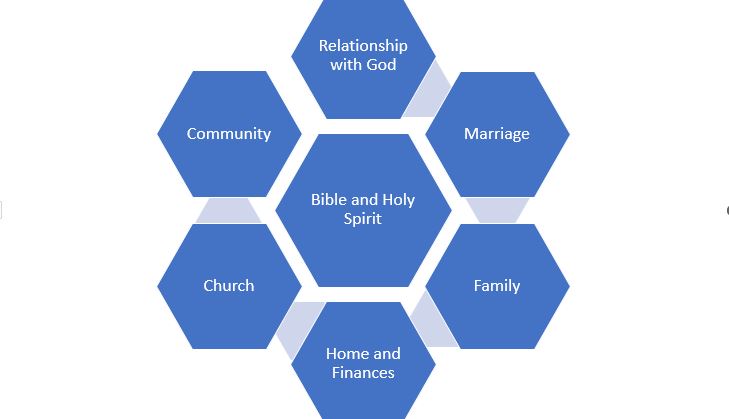
Below is a list – developed over many years of trial and error and listening to God’s voice – of my own priorities, as I believe God has assigned them.
My relationship with God
My marriage
Our family
Our home and finances
Church
Community
What I am going to attempt to do is to build a biblical foundation for thinking about each of these areas of life, beginning with my relationship with God. I will do the same for each area in subsequent blogposts.
However, fewer understand that long ago, God stepped into history with a new paradigm – a new way of doing things (Jeremiah 31:31; 33:14-15).
And today, we live under what’s called the “New Covenant” (Hebrews 12:24), through which we – for the first time in history– have the power to successfully enter in to a true relationship with God (2 Corinthians 3:7-18).
The primary things I can do do to keep my heart tender before the Lord is to stay in His Word, (Hebrews 4:11-13) and to worship.
https://youtu.be/G4BBzzjf_Fs?t=3049
My relationship with God, because of my tender heart and clear conscience, will be characterized by boldness–the kind of audacity exhibited by little John-John Kennedy when he barged into the Oval Office to talk with the President of the United States, his father, John F. Kennedy. (Hebrews 4:16; 1 Timothy 1:5; John 15:7; 1 John 3:22; Psalm 37:4)
“The word ‘imputation,’ according to the Scriptural usage, denotes an attributing of something to a person, or a charging of one with anything, or a setting of something to one's account.” (International Standard Bible Encyclopedia)
Now, instead, the Spirit is working in my life, causing good fruit to grow in my life. My holiness is derived from my relationship with God, not my behavior, or even my zeal. Instead, He sets me “apart.” (Galatians 5:22-23; Colossians 1:6)
I am no longer a “sinner;” I am a saint who occasionally sins. (Romans 6:6-9,11-14; 7:17, 20; 12:2) This is not just semantics; I have a new, regenerated nature. (Romans 7:22; 2 Corinthians 5:17) Although I do not now have a “license” to sin (Romans 6:15), I do not want to, because it is no longer my nature to do so. (Romans 6:17-18, 22; 7:6)
Since the Spirit of Him who raised Jesus from the dead now dwells in me, He will also give me resurrection power in every area of my life. (Romans 8:11; Romans 6:4; Isaiah 60:1) I am going to be victorious in any situation in which I find myself. (Romans 8:37; 2 Corinthians 2:14; 1 John 5:4-5)
I believe that God “gives life to the dead and calls those things which do not exist as though they did,” (Romans 4:17) and that marvelous things are in store for me. (Romans 8:28; Ephesians 3:20; Jeremiah 29:11)
Satisfaction – when the end of my life comes, I will not feel as though I had left anything “on the field,” (Romans 12:1-2), but rather, a deep feeling of having lived a fully and satisfying life (Ephesians 6:13; Psalm 91:16).
My relationship with God is the foundation of my Biblical Worldview.
Next week we will consider how a marriage built on that foundation is built to last (Matthew 7:24-27).
People—our relatives and neighbors, seem to disagree about so many things. And, often, they seem to have such strong opinions on subjects I have not thought about, or have not even heard about! How can I–or for that matter, how can anyone–know what to think, or how to think (accurately)?
… We are inviting you to follow along as we attempt to take a long, contemplative look at the world from a biblical worldview.
There’s a famous quote making it’s way around the Internet, about Benjamin Franklin being asked what kind of government the United States was founded to be. It is said that he replied:
“A Republic, if you can keep it.”
Our founding fathers knew that the history of republics was not good, and that they often tended to end in tyranny.
For example, the once very successful Dutch Republic, formed in 1588, had declined and decayed until it had all but disintegrated by the time of the American founding. And in their own history, their ancestors had formed a republic named the English Commonwealth, in 1649, but it had only lasted for 11 years, until 1660.
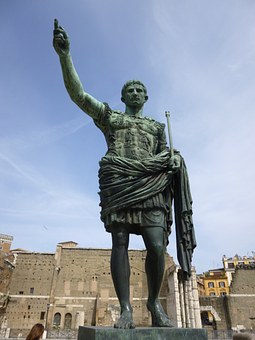
But the primary example that the founding fathers looked to – which had been the model for all later republics – was the Roman Republic, which lasted 482 years, but it ended tragically in 60 years of civil wars and the rise of the dictator, Julius Caesar.
Julius Caesar
Why do republics fail?
In pondering this question, I was drawn back once again to a study of the world’s very first tyrant, Nimrod (first referenced in Genesis 10:8).
“Cush begot Nimrod; he began to be a mighty one on the earth.” (the Hebrew word used here is “gibôr“).
Impetuous = "acting or done quickly and without thought or care," (Bing) marked by impulsive vehemence or passion (or) by force and violence.." (Merriam-Webster)
God had commanded mankind to spread out and take dominion over the earth, but instead the people congregated together in a city and started dominating each other, and Nimrod was the worst of them.
So, why do people follow tyrants?
An article in Psychology Today claims that people hunger for “strongparentalfigures,” and that they are afraid to take responsibility for their own lives, preferring instead to stay on the sidelines, and “let someone else run the show,” even though the people they follow are often “narcissistic,” “calculating,” and “cruel.”
Do you think that is true? That people are afraid to take responsibility for their own lives, and that they would rather follow the directions of someone else, even if they have demonstrated themselves to be narcissistic and cruel?
That’s exactly what the Bible says that the ancient people of Israel did, although they were warned against it.
“‘This is how a king will reign over you,’ Samuel said… ‘He will take the best of your fields, your vineyards, and your olive groves, and give them to his servants. He will take a tenth of your grain and your vintage… He will take a tenth of your sheep. And you will be his servants. And you will cry out in that day because of your king whom you have chosen for yourselves…'”
“They tend to have a blend of narcissistic and antisocial personality disorder traits such as a lack of empathy, grandiosity, thirst for power and control, lying and deceit, indifference to conventional laws or rules or morality, and more.”
Psychology Today, February 2, 2017
It remind us of a warning by one of the Founding Fathers, James Wilson of Pennsylvania:
“Sir, there are two passions which have a powerful influence on the affairs of men. These are ambition and avarice; the love of power, and the love of money. Separately each of these has great force in prompting men to action; but when united in view of the same object, they have in many minds the most violent effects. Place before the eyes of such men, a post of honour that shall be at the same time a place of profit, and they will move heaven and earth to obtain it… And of what kind are the men that will strive for this profitable pre- eminence, through all the bustle of cabal, the heat of contention, the infinite mutual abuse of parties, tearing to pieces the best of characters? It will not be the wise and moderate; the lovers of peace and good order, the men fittest for the trust. It will be the bold and the violent, the men of strong passions and indefatigable activity in their selfish pursuits. These will thrust themselves into your Government and be your rulers.”
In Chapter 3 of our book, we talked about God’s plan for self-government, and the wise advice for doing so from Thomas Jefferson, Alexis de Tocqueville, and William Penn.
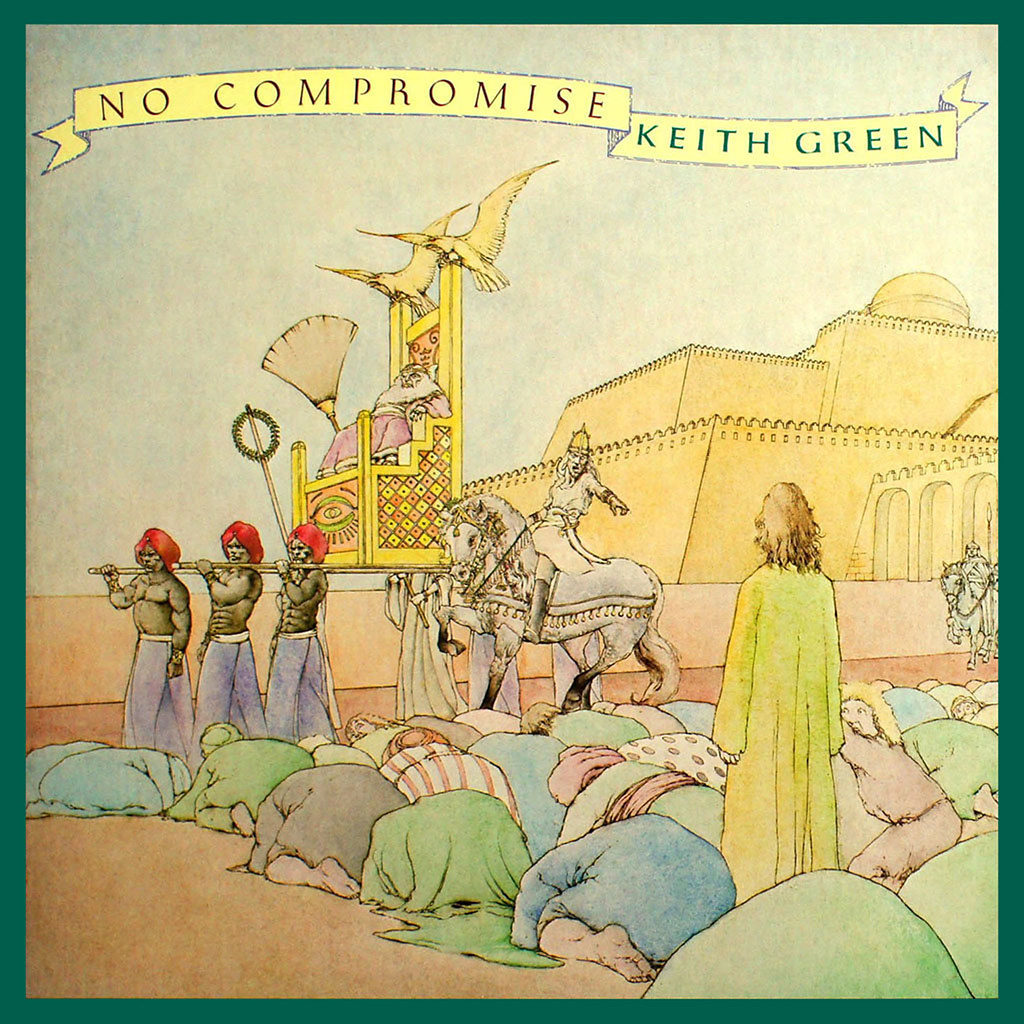
Back in the 1970’s and 80’s there was an old album cover that was pretty popular.
Keith Green‘s“No Compromise”
The artwork on the cover of the album depicts the scene where Haman, the Prime Minister of the Persian Empire is passing by, and everyone is bowing down to him – everyone but one man named Mordecai, and Haman tried to have him killed.
Some years earlier, another man named Daniel, had to disobey the king of his day, and his political enemies tried to have him killed.
And when that same king went to throw them into a fiery furnace, Daniel’s three friends replied:
“If that is the case, our God whom we serve is able to deliver us from the burning fiery furnace, and He will deliver us from your hand, O king. But if not, let it be known to you, O king, that we do not serve your gods, nor will we worship the gold image which you have set up.”
Shadrach, Meshach, and Abed-Nego, Daniel 3:17-18
William Penn, the founder of Pennsylvania, once said:
“Those people who will not be governed by God will be ruled by tyrants.”
And in our third chapter, we quoted from Thomas Jefferson’s 1787 Notes on the State of Virginia, where he wrote:
“Dependence begets subservience and venality, suffocates the germ of virtue, and prepares fit tools for the designs of ambition.”
What is venality?
venality = "openness to bribery or corruption" (dictionary.com)
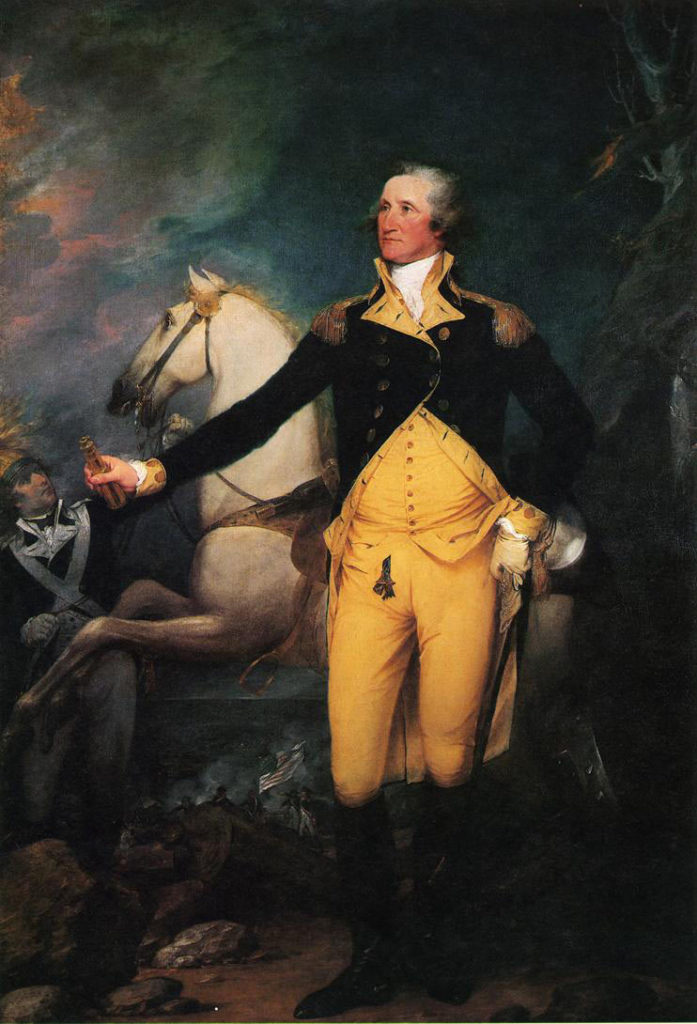
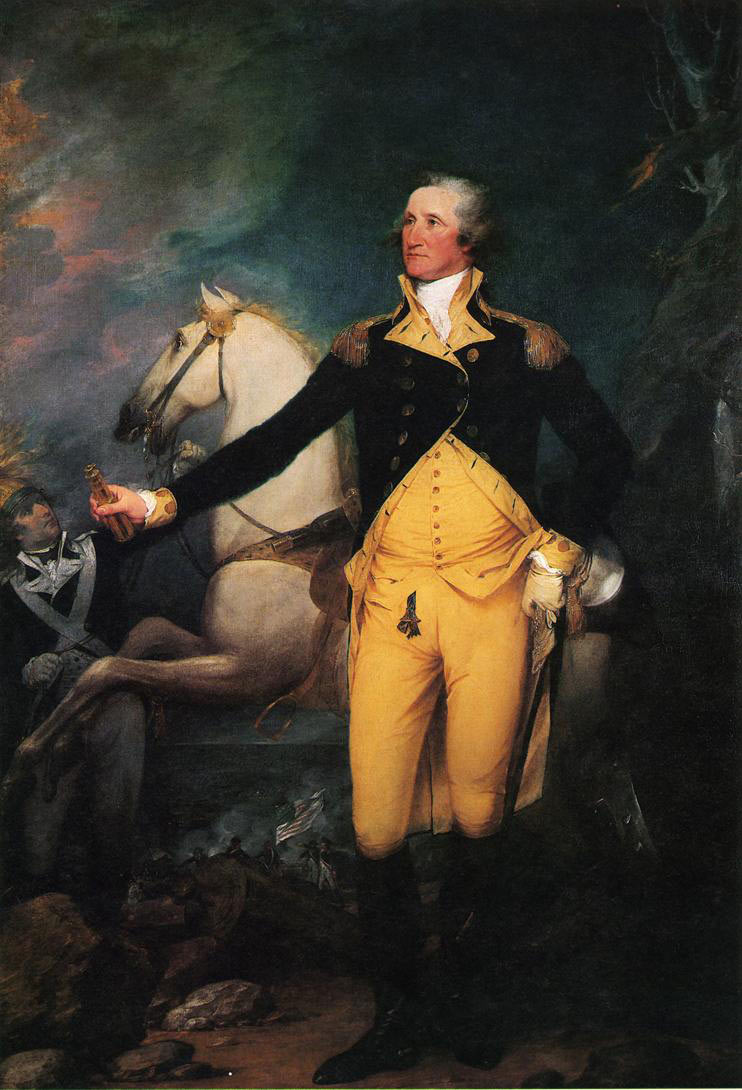
One thing that Mordecai, Daniel, and Shadrach, Meshach, and Abed-Nego definitely had in common is that they were not open to corruption. They were incorruptible, in the same way that George Washington was incorruptible. If we want to be able to stand against tyranny, and against manipulation – even when your government is telling you otherwise, we have to take responsibility for our own lives.
Second Chronicles 7:14 says:
“If My people who are called by My name will humble themselves, and pray and seek My face, and turn from their wicked ways, then I will hear from heaven, and will forgive their sin and heal their land.”
God is ready to heal our land. Are we ready to do our part?
Our second book – The Bible, Christianity & American Government – is still in progress, but chapters are available as a podcast at Podbean and Apple podcasts and on YouTube.
The Bible, Christianity & American Government, Chapter 8
“The Lord raised up judges who delivered them out of the hand of those who plundered them.”
Judges 2:16
The word translated here as “judge” should be understood in the sense of deliverer (see Judges 3:9 & 3:15)
deliverer = "a person who saves someone from a painful or bad experience" (Cambridge Dictionary)
Based on that definition, you can probably think of times when our country was in trouble, and then someone seemed to be raised up -sometimes out of nowhere – specifically to lead the country through that difficult time.
Between 1776 and 1797 – for example – George Washington led the nation through it’s War for Independence, and became the First President of the United States.
David McCullough, in his famous book – 1776 – wrote this about Washington:
“Without (his) leadership and unrelenting perseverance, the (American) revolution almost certainly would have failed.”
1776: The Illustrated Edition by David McCullough, 2007, p. 230
And in our own century there have been numerous cases of this, most notably John F. Kennedy in the Cuban Missile Crisis of October, 1962, when the President of the United States single-handedly “stared down” the Soviet Union when they attempted to to place nuclear missiles in Cuba.
As we, in 2021, look around us, at the trouble our nation is in, we can be tempted to feel hopeless, even desperate. But we can take a lesson from the people of ancient Israel.
“When the children of Israel cried out to the LORD, the LORD raised up a deliverer…”
Judges 3:9
“When the children of Israel cried out to the LORD, the LORD raised up a deliverer for them…”
Judges 3:15
Benjamin Franklin once said:
“Have we now forgotten that powerful Friend? Or do we image we no longer need His assistance?”
And the Apostle Paul told us that we have been born in America at this particular moment in time for a reason, so that we would
“Seek the Lord, in the hope that they might grope for Him and find Him…”
Acts 17:27
Yes, times are difficult, and yes, most of the institutions of our society are failing and falling down around us. It’s time to “cry out” to the Lord for a deliverer, and believe that He will provide one.
Here is the word of the Lord for today:
“God, who gives life to the dead and calls those things which do not exist as though they did…” (Romans 4:17)